
What exactly are ICD-10 codes?
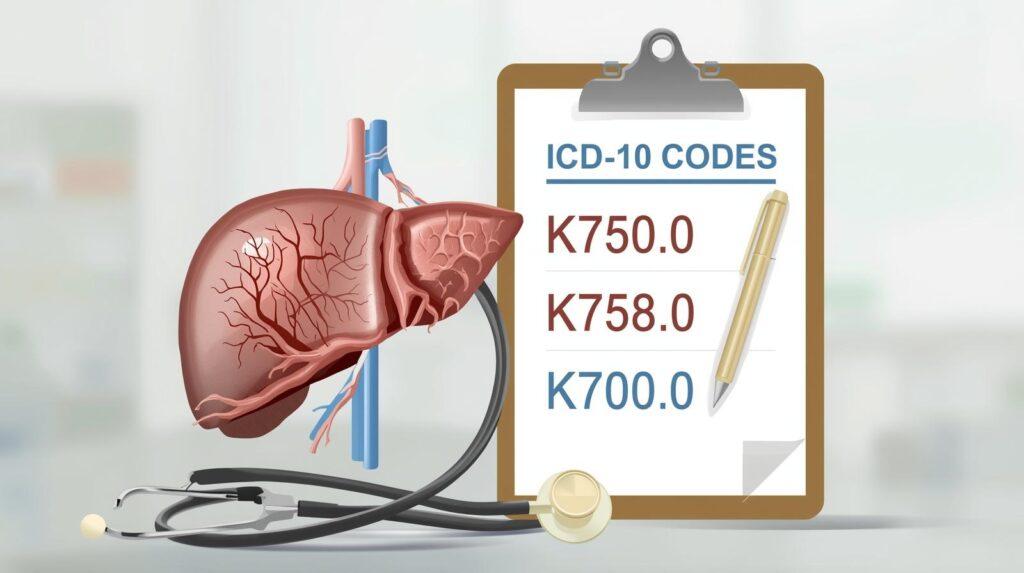
You may have heard your doctor mention ICD-10 codes during your visits or in your medical reports and wondered what they mean. These ICD-10 codes are part of a global system that allows doctors, hospitals, researchers, and insurance companies to communicate about health conditions using a standardized “universal language.” When it comes to liver conditions, the fatty liver disease ICD coding system helps ensure accurate diagnosis, documentation, and treatment planning.
These codes help:
- Keep medical records accurate and consistent
- Ensure you get the right treatment and follow-up
- Simplify billing, insurance, and research
But what do these codes mean for your liver health and how do they help doctors understand and manage conditions like Fatty Liver Disease? Let’s break it down.
What Is Fatty Liver Disease?
Imagine your liver as your body’s traffic controller, responsible for managing how fats, sugars, and toxins are processed and cleared out. Fatty liver disease happens when there’s too much fat stored inside your liver cells, and the fatty liver disease ICD classification helps doctors document and track it correctly. While some fat in the liver is normal, too much is a red flag that your liver is struggling.
There are two main types of fatty liver disease:
- Metabolic dysfunction-Associated Steatotic Liver Disease : This type happens mostly in people who don’t consume much alcohol but have other risk factors, like obesity, diabetes, or high cholesterol. It’s the most common liver problem globally and tied closely to lifestyle factors.
- Alcoholic Fatty Liver Disease (AFLD): As the name suggests, this form is linked directly to heavy alcohol use, which overwhelms the liver and leads to fat buildup.
If MASLD progresses, it can cause liver inflammation and damage, known as Metabolic dysfunction-Associated Steatohepatitis (MASH). This condition can lead to scarring (cirrhosis) or even liver failure if not spotted and managed early.bmjopengastro.bmj
What Are ICD-10 Codes, and Why Do They Matter?
When you visit your healthcare provider, they don’t just write down “fatty liver” in your records. Instead, they use a universal language called ICD-10 codes. These codes help doctors, researchers, and insurance companies communicate clearly about your condition, no matter where you are in the world.
Accurate ICD-10 coding means:
- Your care team tracks your condition correctly over time
- Insurance claims are processed smoothly and fairly
- Public health studies can figure out who is at risk and how to improve treatments
Unfortunately, if doctors don’t document your disease carefully, it might appear less severe than it is, potentially affecting your treatment and health coverage.bmjopengastro.bmj
Key Fatty Liver ICD-10 Codes You Should Know
Here are the codes your doctor might use and what they mean for you:
- K76.0: Fatty (change of) liver, not elsewhere classified
This code is used most often when your doctor diagnoses Metabolic dysfunction-Associated Steatotic Liver , especially if imaging tests or biopsies rule out alcohol as a cause. It means there’s fat in your liver, but no signs yet of severe damage or inflammation.icdcodes+1 - K70.0: Alcoholic fatty liver
If alcohol is the main cause, this code applies. It’s part of a broader category of alcoholic liver diseases, helping your team focus on therapy to stop alcohol-related damage.aapc - K75.8: Other specified inflammatory liver diseases
This is typically for cases where your biopsy shows you have MASH—the inflamed, damaged form of fatty liver that requires closer monitoring.icdcodes+1
Why Is Good Documentation Important for You?
Strong documentation means your healthcare providers have a clear picture of your liver health. That helps them:
- Personalize your treatment plan based on the exact stage and cause of your fatty liver
- Identify other related conditions like diabetes or high blood pressure to treat along with liver disease
- Decide on the right medications and lifestyle advice
If you have had tests like biopsies or imaging, make sure your doctor’s notes reflect these details.s10
How Your ICD-10 Code Reflects Your Health Journey
ICD-10 codes aren’t permanent labels. They evolve as your health changes.
For example:
- Improved metabolic health—through weight loss, better blood sugar control, and exercise—can shift your diagnosis from MASH (K75.81) to a milder simple fatty liver (K76.0).
- In some cases, when the liver returns to normal, the fatty liver code can even be removed entirely.
Your code is like a snapshot of your liver’s current condition—and a reminder that your lifestyle directly influences your medical record.
What your ICD-10 code signifies about medical priorities
Your ICD-10 code helps your doctor decide what needs attention first. For example, a code for simple fatty liver (K76.0) signals the need for lifestyle changes and routine monitoring, while a more advanced code like MASH (K75.81) suggests inflammation and a higher risk of progression, requiring closer follow-up and possibly more tests.
In fatty liver disease ICD documentation, if related conditions like diabetes (E11) or obesity (E66) are also coded, it means these factors are contributing to liver damage and must be managed aggressively. In short, your ICD-10 code is a snapshot of what your doctor sees as the most important areas to focus on for your health.
Taking Charge of Your Liver Health
Understanding fatty liver and its ICD-10 codes means you can speak confidently with your healthcare team and ensure your records and treatments reflect your true health needs. Accurate coding and clear communication between you and your doctor pave the way for the best care possible.
Remember, early action is powerful. Lifestyle changes and medical guidance can prevent fatty liver disease from becoming a bigger issue down the road.
How Can You Manage Fatty Liver Disease?
The good news is that fatty liver disease is very manageable—especially with lifestyle changes that you control. Here’s what you can do to protect your liver:
- Eat a healthy diet rich in fruits, vegetables, whole grains, and healthy fats
- Exercise regularly—aim for at least 150 minutes a week to support weight loss and liver health
- Avoid or limit alcohol intake
- Manage conditions like diabetes and high cholesterol with your doctor’s support
- Stay in touch with your healthcare team to monitor your liver status over time
- Improving metabolic health: better control of weight, blood sugar, cholesterol, and blood pressure can directly influence the ICD-10 code. ICD-10 codes aren’t permanent labels they can change as your health improves.
If your condition progresses, your doctors will adjust treatments as needed, so ongoing care is key.mayoclinic+1
References
- ICD-10 Documentation Guidelines for Fatty Liver – ICDcodes.ai, 2025icdcodes
- Fatty Infiltration of the Liver – ICD-10 Documentation – ICDcodes.ai, 2025icdcodes
- Detecting Metabolic dysfunction-Associated Steatotic Liver Disease and Risk Factors: Accuracy and Limitations of the ICD-10-AM, BMJ Open Gastroenterology, 2021bmjopengastro.bmj
- Fatty Infiltration of the Liver – AI-Powered ICD-10 Guide, 2025s10
- ICD-10 Code for Alcoholic Fatty Liver (K70.0) – AAPC, 2002aapc
- Metabolic dysfunction-Associated Steatotic Liver Disease – Diagnosis and Treatment, Mayo Clinic, 2025mayoclinic
- Metabolic dysfunction-Associated Steatotic Liver Disease – Symptoms and Causes, Mayo Clinic, 2025mayoclinic
To understand what may be contributing to your condition, you can also read our article on the Top 10 Risk Factors for Fatty Liver Disease, which explains the most common triggers and how to manage them.