Fatty Liver Disease: From a Silent Beginning to a Serious Health Risk
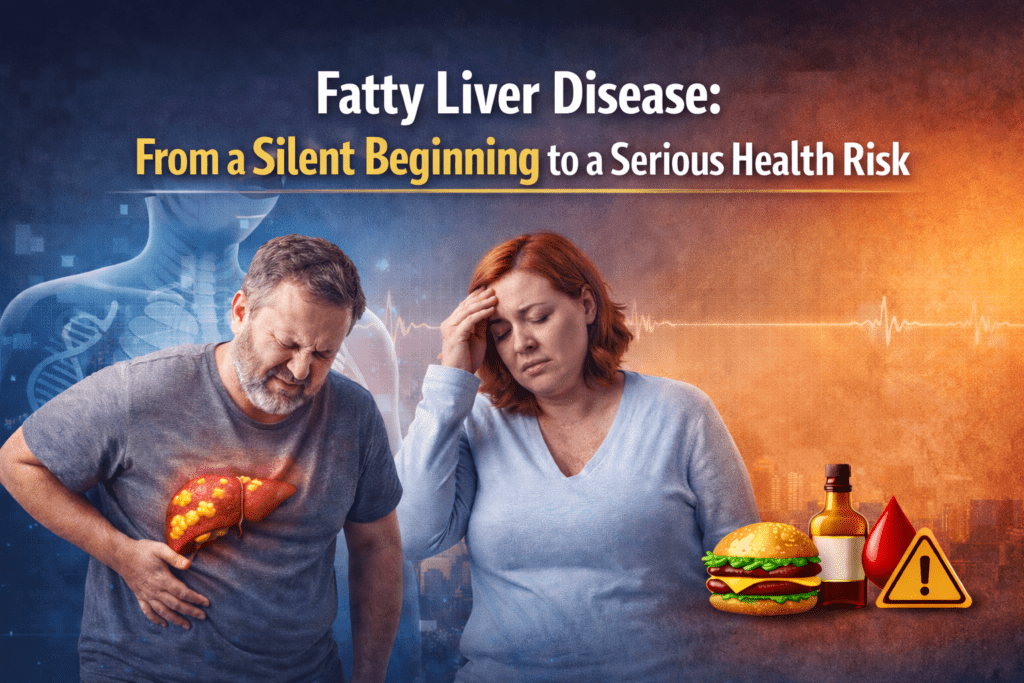
When Your Liver Starts Storing Fat Instead of Protecting You? Early signs and risks
The liver is one of the most resilient organs in the human body. It detoxifies harmful substances, regulates fat and glucose metabolism, stores essential nutrients, and supports immune function. Despite its importance, early liver damage often goes unnoticed because the liver can continue functioning even under stress.
Fatty liver disease develops when fat slowly accumulates inside liver cells, disrupting normal metabolic processes without causing early symptoms.
Fatty liver disease has become a major global health concern. Once considered a condition linked primarily to alcohol use, it is now increasingly diagnosed in people who do not consume alcohol at all.
Sedentary lifestyles, calorie-dense diets, and metabolic disorders have driven a sharp rise in Metabolic dysfunction-Associated Steatotic Liver disease worldwide. Early recognition is critical because timely intervention can prevent progression and allow complete recovery in many cases.
 What Is Fatty Liver Disease and Why Does It Matter For Liver Health?
Fatty liver disease occurs when excess fat accumulates within liver cells and exceeds approximately five to ten percent of the liver’s total weight. Beyond this threshold, liver cells begin to experience metabolic stress and dysfunction, a condition medically termed hepatic steatosis.
Fatty liver disease is broadly classified into alcoholic fatty liver disease, which is caused by excessive alcohol intake, and Metabolic dysfunction-Associated Steatotic Liver disease, recently renamed metabolic dysfunction–associated steatotic liver disease . MASLD is driven by metabolic risk factors such as obesity, insulin resistance, type 2 diabetes, dyslipidemia, and unhealthy dietary patterns.
MASLD is now the most common chronic liver disease globally, affecting nearly one-third of the adult population and an increasing number of children and adolescents.
 Why Fatty Liver Is Becoming So Common Today?
The rising prevalence of fatty liver disease closely reflects changes in modern lifestyles. Reduced physical activity, prolonged sitting, increased intake of refined carbohydrates and sugary beverages, chronic stress, and sleep deprivation all contribute to insulin resistance and abnormal fat metabolism.
Fatty liver disease is strongly associated with abdominal obesity, diabetes, metabolic syndrome, and conditions such as polycystic ovary syndrome. Importantly, clinical studies have shown that fatty liver can also develop in individuals with normal body weight due to genetic predisposition and metabolic dysfunction, a condition often referred to as “lean MASLD”.
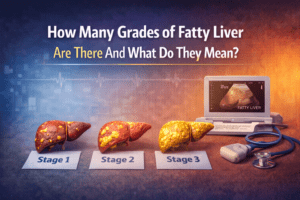 How Many Grades of Fatty Liver Are There And What Do They Mean?
Fatty liver disease is commonly classified into three grades based on the degree of fat accumulation observed on imaging studies such as ultrasound and on the presence of liver inflammation or fibrosis. This grading system helps clinicians assess disease severity and predict the risk of progression to advanced liver disease.
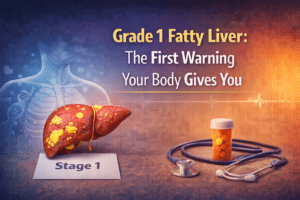 Grade 1 Fatty Liver: The First Warning Your Body Gives You
Grade 1 fatty liver represents the earliest and mildest stage of fatty liver disease. At this stage, mild fat accumulation is present within liver cells, but liver structure and function are largely preserved. Most individuals with grade 1 fatty liver are asymptomatic, and the condition is often discovered incidentally during routine imaging or health evaluations.
Grade 1 fatty liver is commonly associated with sedentary behavior, increased consumption of processed foods and sugars, early insulin resistance, mild weight gain, and occasional alcohol intake. Clinical evidence confirms that obesity or heavy alcohol use is not required for the development of grade 1 fatty liver.
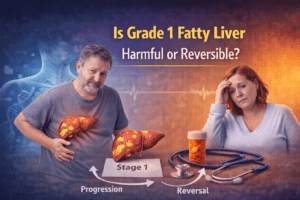 Is Grade 1 Fatty Liver Harmful or Reversible?
Grade 1 fatty liver is not immediately harmful and does not usually cause permanent liver damage at this stage. However, it represents an early marker of metabolic stress and should not be ignored. Longitudinal studies have shown that untreated fatty liver can progress over time, particularly in the presence of diabetes, obesity, or dyslipidemia.
Importantly, grade 1 fatty liver is highly reversible. Early lifestyle intervention can lead to significant reductions in liver fat and restoration of normal liver health.
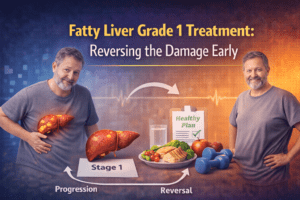
Fatty Liver Grade 1 Treatment: Reversing the Damage Early
The management of grade 1 fatty liver focuses primarily on lifestyle modification rather than pharmacological therapy. Clinical trials have consistently demonstrated that modest weight loss, typically five to seven percent of body weight, leads to significant reductions in liver fat content.
Regular physical activity improves insulin sensitivity and hepatic fat metabolism, while dietary interventions that reduce refined carbohydrates, added sugars, and saturated fats further support liver recovery. Complete avoidance of alcohol is recommended, even in Metabolic dysfunction-Associated Steatotic Liver disease, as alcohol can accelerate disease progression. Improvements in liver fat can often be observed within a few months of sustained lifestyle changes.
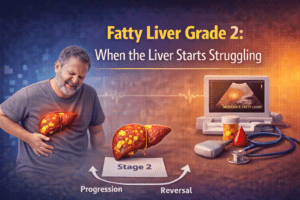 Fatty Liver Grade 2: When the Liver Starts Struggling
Fatty liver grade 2 is characterized by moderate fat accumulation within liver cells. At this stage, the liver begins to show signs of metabolic stress, and some individuals may experience symptoms such as persistent fatigue or mild discomfort in the right upper abdomen. Laboratory abnormalities and worsening insulin resistance are more commonly observed.
Grade 2 fatty liver carries a higher risk of progression to Metabolic dysfunction-Associated Steatohepatitis (MASH), a condition marked by inflammation and liver cell injury.
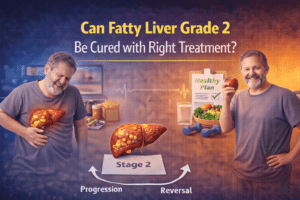 Can Fatty Liver Grade 2 Be Cured with Right Treatment?
Evidence suggests that fatty liver grade 2 can still be reversed, particularly when diagnosed early. However, reversal typically requires more intensive lifestyle intervention, including greater and sustained weight loss, structured exercise programs, and strict dietary control.
Medical supervision becomes increasingly important at this stage. In selected patients with obesity or type 2 diabetes, newer metabolic therapies such as GLP-1 receptor agonists have shown promise in reducing liver fat and improving inflammation, although lifestyle modification remains the foundation of treatment.
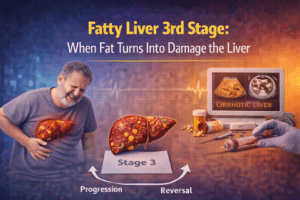 Fatty Liver 3rd Stage: When Fat Turns Into Damage the Liver
The fatty liver 3rd stage represents severe disease, where excessive fat accumulation is accompanied by liver inflammation and hepatocellular injury. This stage is commonly referred to as Metabolic dysfunction-Associated Steatohepatitis. Persistent inflammation can lead to fibrosis, characterized by scar tissue formation within the liver.
As fibrosis progresses, it may culminate in cirrhosis, which permanently disrupts liver architecture and function. Cirrhosis significantly increases the risk of liver failure and hepatocellular carcinoma. Clinical manifestations may include profound fatigue, loss of appetite, abdominal swelling, and jaundice in advanced stages.
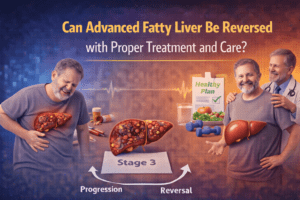 Can Advanced Fatty Liver Be Reversed with Proper Treatment and Care?
When fibrosis is mild, partial regression is possible with aggressive lifestyle changes and appropriate medical management. However, once cirrhosis develops, liver damage is largely irreversible, and treatment focuses on preventing complications and evaluating the need for liver transplantation.
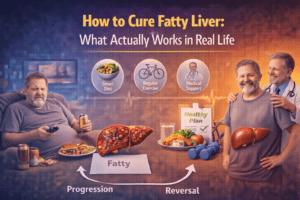
How to Cure Fatty Liver: What Actually Works in Real Life
There is currently no single medication approved as a universal cure for fatty liver disease. The most effective strategy involves addressing the underlying metabolic dysfunction. Sustained weight loss, long-term dietary modification, regular physical activity, optimal control of blood glucose and lipid levels, and complete avoidance of alcohol form the cornerstone of evidence-based management.
Early diagnosis and consistent follow-up are critical in preventing disease progression and improving long-term outcomes.
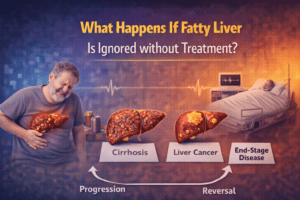 What Happens If Fatty Liver Is Ignored without Treatment?
If left untreated, fatty liver disease can progress silently over years. Advanced fibrosis, cirrhosis, liver failure, and liver cancer may develop. Additionally, extensive evidence indicates that individuals with fatty liver disease have a significantly increased risk of cardiovascular disease, which remains the leading cause of mortality in this population.
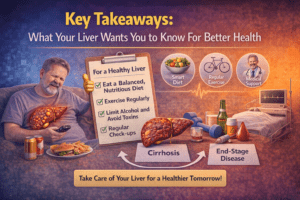 Key Takeaways: What Your Liver Wants You to Know For Better Health
Fatty liver disease is common, often silent, and potentially serious. Grade 1 fatty liver is an early warning that provides a crucial opportunity for complete reversal. There are three grades of fatty liver, each associated with progressively higher risk.
Fatty liver grade 2 can often be cured with disciplined lifestyle changes, while the fatty liver 3rd stage carries long-term consequences. Early action can dramatically alter disease trajectory and restore liver health.